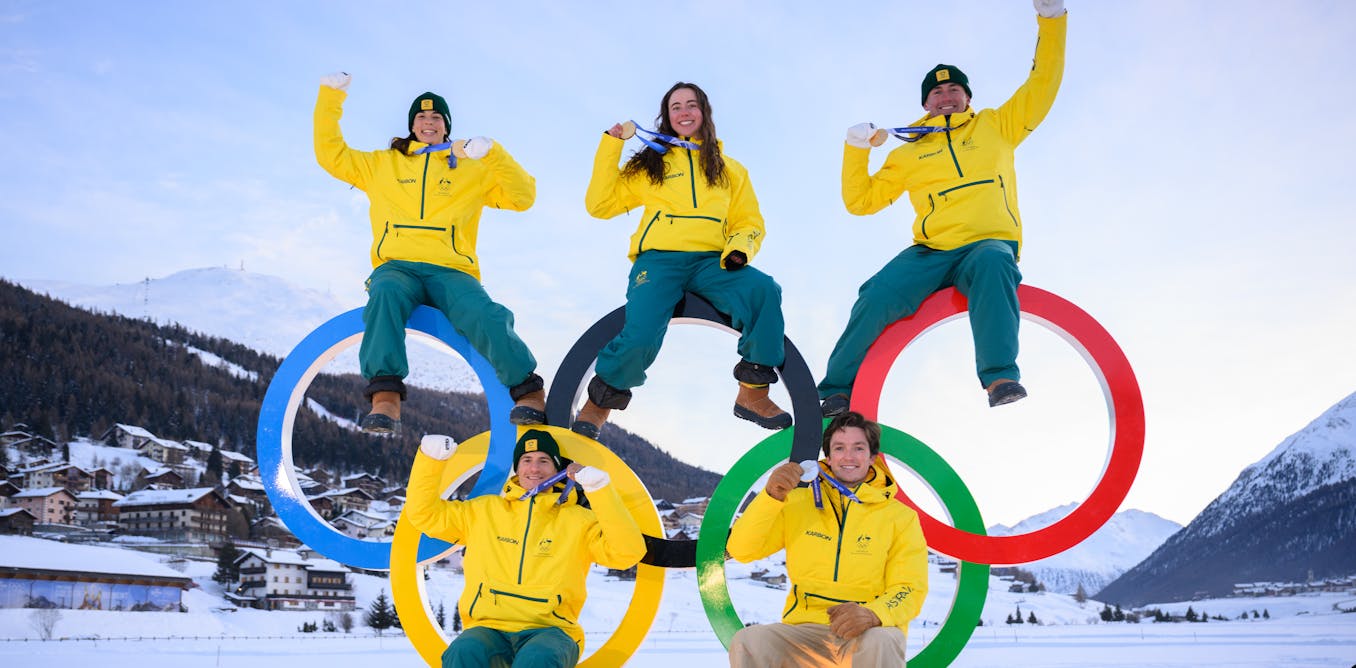
Australia made a significant mark at the Milan Cortina 2026 Winter Olympics by securing its most successful medal haul to date. Talented athletes like Jakara Anthony, Josie Baff, and Cooper Woods led the way, contributing to a total of six medals, including three coveted golds. This impressive achievement is a reflection of not only individual talent but also systemic support for winter sports in the nation.
Among the standout performances was Jakara Anthony, who clinched her second consecutive gold in the women’s dual moguls. "Winning my second gold medal feels incredible," said Anthony. "All the hard work and dedication has paid off, and I’m excited for the future of winter sports in Australia." Anthony's victory signifies a remarkable milestone, as she became the first Australian to win gold at back-to-back Winter Olympics.
Cooper Woods and Josie Baff also made headlines by bringing home gold medals in the men’s individual moguls and women’s snowboard cross, respectively. Woods expressed his excitement, saying, "This victory opens many doors for aspiring athletes in our sport." Baff echoed similar sentiments, adding that winning gold would inspire younger generations, remarking, "It shows that hard work truly pays off."

Scotty James, a seasoned competitor, further elevated Australia’s Olympic profile by earning a silver medal in the men’s half-pipe, making him the first Australian to achieve three Winter Olympic medals. "It’s an honor to contribute to Australia’s success on this stage," James noted. "The support from the community and my team made this possible."
Matt Graham also added to his medal count with a bronze in the men’s dual moguls, while Danielle Scott secured a silver in the women’s aerials. Both athletes underscored the importance of teamwork in their achievements. "Every medal won is a team effort, and I’m grateful for my support system," Graham said. Scott pointed out, "We prove that Australia can stand tall in winter sports, alongside traditional countries."
The success is not limited to just the medalists; the broader cohort of 53 Australian athletes demonstrated promising talent. Young competitors, including Valentino Guseli, Tess Coady, Jackson Harvey, and Indra Brown, showcased their skills by not only making finals but also achieving top-ten results in their respective events.
Australian winter sports have also benefited from significant government support, which has contributed to their recent successes. In July 2024, the Australian federal government announced a funding boost of A$489 million to support elite Olympic and Paralympic athletes, coaches, and staff for 2025-2026. This funding represents a 50% increase compared to previous commitments. "Our government is committed to investing in the future of sports in Australia," said the Sports Minister. "This funding will enhance training, wellbeing, and preparation for our athletes."

Additionally, analysts suggest that increased investments in athlete development and facilities have played a crucial role. According to sports analyst Dr. Anne Taylor, "The advancements in training facilities and coaching methods have significantly improved our athletes' performances."
As Australia celebrates its notable achievements at Milan Cortina, the outlook for winter sports appears strong. With enhanced funding, evolving training methods, and a roster of promising young talent, the nation may continue to see growth and success in future competitions. The efforts to foster an enduring winter sports culture are well underway, and with the next Winter Olympics on the horizon, the stage is set for continued excellence.
"This has been a historical moment for Australia, and we are excited to see what the future holds, both in Beijing and beyond," concluded a spokesperson for the Australian Olympic Committee. The journey to cement Australia’s place in winter sports history is just beginning, as support structures continue to build on this solid foundation.