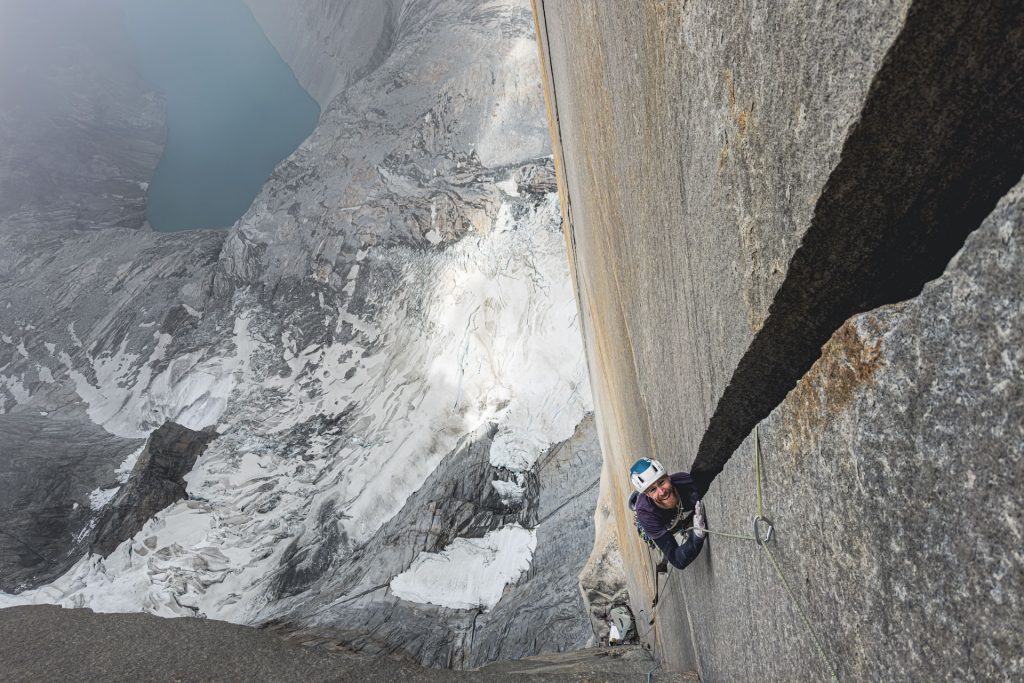
Torre dell Paine, known for its breathtaking beauty and formidable challenges, recently witnessed a monumental achievement in the climbing world. On February 14, 2026, seasoned climbers Tommy Caldwell and Siebe Vanhee successfully completed a free ascent of the Torre Centrale del Paine, marking a historic milestone by scaling the towering rock face in less than 24 hours.
The Torre Centrale, soaring to 1,200 meters, presents a notorious climbing experience. The route, primarily the South African route, has seen few successful free climbs since its first ascent in 2009, which took a legendary team 13 days to complete. This daunting backdrop provided both a challenge and inspiration for Caldwell and Vanhee as they decided to tackle the immense wall together.
"Climbing here is another beast compared to El Capitan," said Vanhee. His casual humor belies the seriousness of the undertaking. A seasoned climber himself, he had already faced the Torre’s challenges, having previously summited with a different route. Caldwell, an experienced climber famed for climbing the Dawn Wall over a decade ago, brought a wealth of knowledge and skill, fueling their ambition to accomplish the climb with unprecedented speed.
They started their ascent at 3:20 a.m., a timing that reflects their careful planning over several years. Both climbers had been mulling over this challenge, with previous attempts falling short due to unfavorable conditions. "Comparing El Cap to the east face of Torre Centrale would be like ignoring the weather in Patagonia," noted Vanhee, highlighting the unpredictability of Patagonia’s notorious weather patterns that had thwarted their earlier attempts.
Their initial efforts on January 28 and 29 and again from February 2 to 4 ended in frustration as storms rolled in and hindered progress. However, their perseverance paid off with this successful third attempt. In a display of endurance and technical prowess, they reached the summit in complete darkness, pushing through the inherent difficulties the climb presented.
"In 2018, I came with Sean, who had the idea of doing this route quickly, without fixed ropes or portaledges," Caldwell reminisced. “But in reality, the conditions are very difficult to achieve. You need good weather, of course, but you also need cracks free of ice to free climb." This insight into the climb speaks volumes about the careful calculations required for such an endeavor, where every detail can mean the difference between success and failure.
After reaching the summit, the climbers faced another arduous challenge: an eight-hour descent in treacherous weather. Patagonian winds battered them, yet their resolve remained intact as they rappelled down the mountain. The combination of fierce winds and challenging visibility made for an exhausting return trip.

The partnership between Caldwell and Vanhee is a testament to their mutual respect and shared passion for climbing. Their achievement not only adds to their personal accomplishments but elevates the narrative around Torre del Paine as a sought-after destination for climbers around the globe. Caldwell, reflecting on the experience, emphasized its significance: "It was a full-circle moment for us. To be able to climb this wall quickly was something we both dreamed of for years."
This ascent sheds light on the ever-evolving nature of climbing challenges. As climbers continue to push the limits of what is possible, it is evident that Torre del Paine remains a significant landmark in the climbing community. Furthermore, the success of Caldwell and Vanhee could inspire a new wave of climbers to attempt similar bold feats on this iconic mountain.
As the climbing world looks ahead, one can only anticipate what future challenges await at Torre del Paine and beyond. Caldwell and Vanhee's achievement has set a new benchmark, unveiling the potential for quick, free ascents on some of the most demanding routes worldwide. With their landmark climb, they have not only made history but also fueled the ambitions of countless climbers who dare to dream of similar feats.