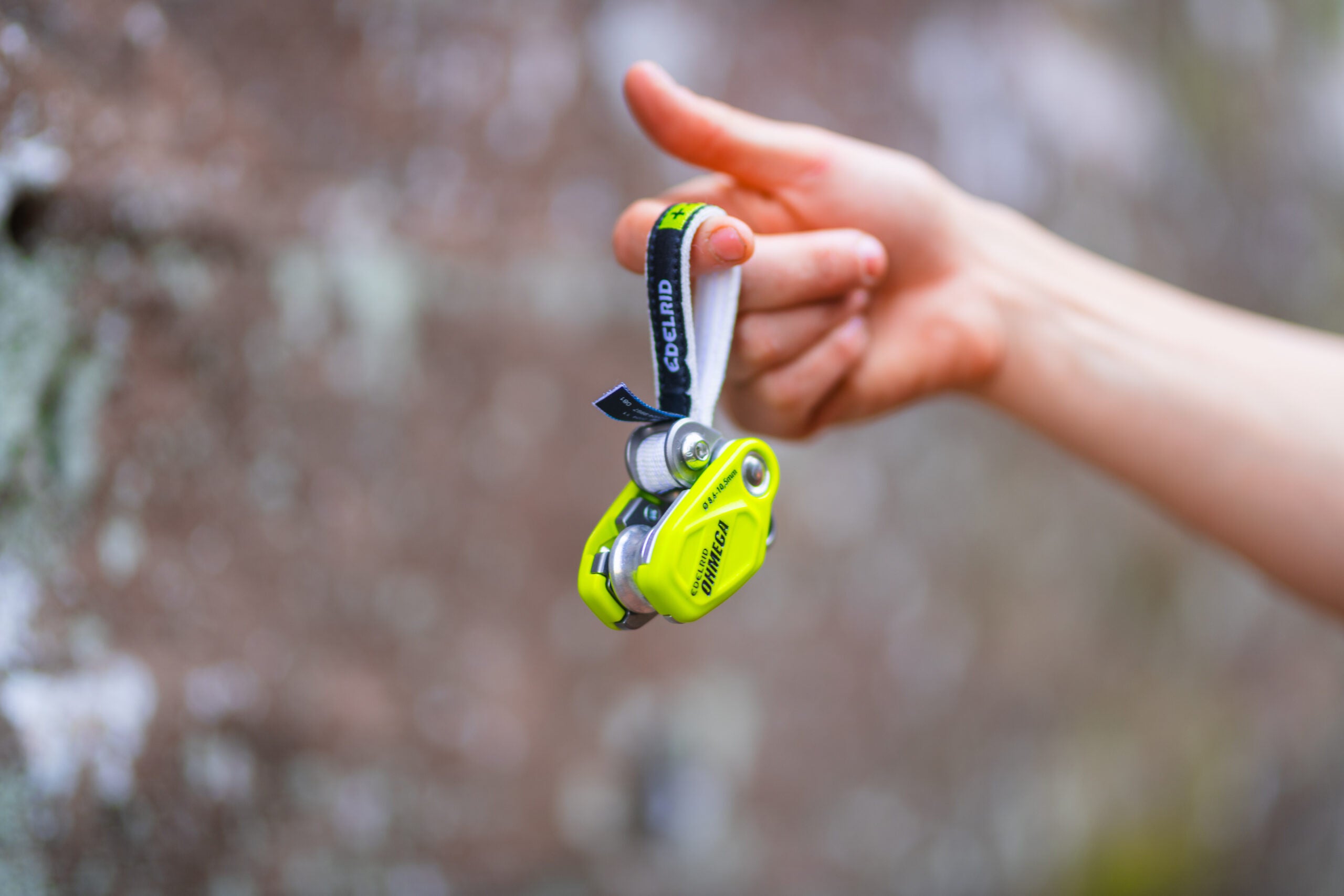
Edelrid's latest innovation, the Ohmega brake assistant, is ready to make waves in the climbing community. Slated for release in August, this new device addresses a significant gap in belaying technology, especially for pairs with varying body weights.
Traditionally, climbers had the Ohm as a primary choice for a brake assistant, a product necessary yet riddled with issues. The Ohm functions as an assisted-braking resistor that works alongside a standard belay device. When a climber outweighs their belayer by a considerable margin, the Ohm provides additional friction. It serves to make the belayer seem 'heavier,' effectively minimizing the potential swing during falls.
However, the Ohmega is reportedly designed to outperform its predecessor by a substantial margin. "Any climbing duo with a weight difference should invest in one," said a representative familiar with the product. Given the nuances of climbing, these advancements could potentially improve safety and experience while scaling the rock.
The operation of the Ohmega is straightforward. It functions similarly to a camming device but is attached to a Dyneema sling. Users simply press a button to open the cam, set the rope inside it, and then attach a carabiner to the first bolt of their climbing route. Important to note is that Edelrid suggests this device for use solely on sport routes—traditional climbing is not its intended application.
The Ohmega offers three distinct levels of braking assistance tailored for climbers and belayers of differing weights. In case of a fall, the cam engages, dramatically reducing the chances of the belayer being pulled up against the wall while ensuring a soft catch for the climber.
During a recent testing session at Jackson Falls, I had the opportunity to assess the Ohmega alongside two climbing partners. My regular climbing partner, Morgan Miller, who happens to outweigh me by 70 pounds, took several test falls, ranging from five to 25 feet. Typically, such significant weight differences create tension; without proper gear, I often found myself hoisted off the ground. However, with the Ohmega in play, I remained firmly grounded. "The catch was impressively soft," noted Miller, emphasizing the device's capabilities.
The adjustable braking settings proved crucial during one of Miller’s falls when we switched from maximum to minimum assistance. This adjustment led to an unexpected situation where both of us ended up colliding—a stark reminder of how these settings change the dynamics of climbing. This adaptability makes the Ohmega a compelling investment for diverse climbing pairs.

In terms of durability, after deploying the Ohmega on 50 different climbs, I noticed only minor cosmetic scratches on the outer plastic coating. Edelrid has indicated that the Dyneema sling portion can be replaced, but further details regarding the replacement process are still pending.
In a gym setting, I tested the lowest level of braking assistance with Jonah Ramirez, whose weight difference from me was merely 30 pounds. "Clipping with the Ohmega is a breeze. I never felt like I was fighting against the device to clip at any point," said Ramirez, acknowledging the stark contrast in his experience compared to the Ohm. Common problems like shortroping and rope snags, which frequently plagued the Ohm, seemed nonexistent with the Ohmega, even on challenging overhung routes.
Providing a more user-friendly experience, the Ohmega eliminates the need for advanced belaying techniques. Under the previous system with the Ohm, I always needed to position myself meticulously to prevent the rope from getting snagged when my climber was clipping in. "The Ohm lowers the belayer skill barrier, a big plus for climbers and belayers alike," Miller remarked, underscoring the significance of such improvements.
Overall, the Ohmega presents a promising advancement in climbing technology. As partners of different sizes seek ways to climb safely and effectively, this latest device from Edelrid could play a crucial role in eliminating stress and enhancing the enjoyment of climbing together. With the product launch looming, the climbing community waits with anticipation to see how the Ohmega impacts their experiences on the rock.