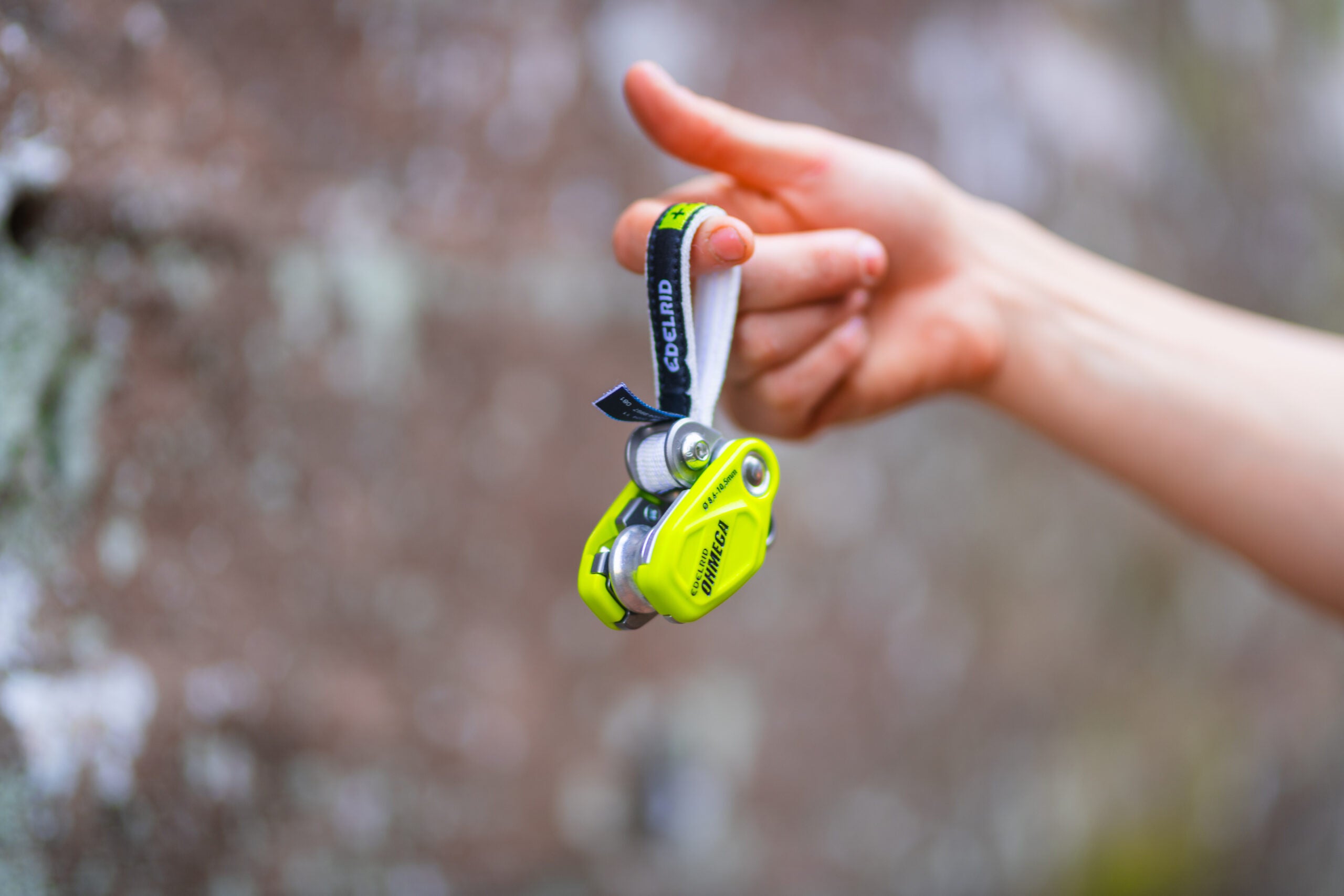
Edelrid has unveiled its latest innovation in climbing safety, the Ohmega, set to launch in August 2025. This new brake assistant is poised to outperform its predecessor, the Ohm, particularly for climbers who work with partners of varying weights. As Mary Andino, a climber who regularly partners with someone 70 pounds heavier, noted, the Ohm had several drawbacks despite being a critical piece of gear.
"Until now, the Ohm represented the only real choice for a brake assistant on the market," Andino explained. The Ohm was designed to provide additional friction, providing a safety net when a significant weight differential exists between a climber and their belayer. This was essential for reducing fall distances and keeping the belayer grounded during falls.
The Ohmega promises significant advancements over the Ohm, particularly for mixed-weight climbing duos. By acting as a camming device secured to a Dyneema sling, the Ohmega allows users to customize the level of brake assistance based on the weight difference. "When I tested the Ohmega, I barely left the ground," said Andino. Her experiences during tests with her partner, Morgan Miller, highlighted the efficiency of the new device. "Miller commented on how soft the catch was," she added, illustrating the device's ability to minimize the risk during falls.
The excitement surrounding the Ohmega stems from its ability to function optimally on sport routes, designated by Edelrid. Unlike its predecessor, the Ohmega features a more intuitive design where climbers can open the cam with a simple button press, insert the rope, and clip a carabiner to secure it to the first bolt. The flexible assistance levels mean climbers can adjust the settings depending on their weight disparities, offering an unparalleled experience.
Miller's feedback after taking multiple whips demonstrated the advantages of the Ohmega. "Even on falls at the first and second clips, I didn’t come close to touching the ground," he said, noting that the device's smart design negated the common issue of belayers getting pulled off the ground. The adjustable braking settings made certain that in one instance where the most assistance was turned down, the consequences were evident, with both climbers nearly colliding.
Edelrid’s commitment to safety is further evidenced by the Ohmega's durable design. After extensive testing, Andino observed only minor cosmetic scratches after navigating through 50 routes. Edelrid indicated that the Dyneema sling would be replaceable, a detail that many users will surely appreciate, though specifics on the replacement process remain forthcoming.
Feedback from gym-based testing also supported the Ohmega’s superior design. Climbing partner Jonah Ramirez, who shared a smaller weight differential, found the device highly user-friendly. "Clipping with the Ohmega is a breeze. I never felt like I was fighting against the device to clip at any point," he stated, highlighting a common frustration with the older Ohm model where ropes often get stuck, particularly on overhanging routes.
The simplicity of belaying with the Ohmega has also been a notable contrast to using the Ohm. Andino described the increased skill requirements necessary for the Ohm, saying, "Belaying with a standard Ohm on the wall takes a deft hand and an added layer of skill.” In comparison, the Ohmega eliminates the need for nuanced techniques, providing a smoother experience for both the belayer and climber. Miller echoed this sentiment, stating the Ohm "lowers the belayer skill barrier, a big plus for climbers and belayers alike."
When examining the differences between the Ohm and the newly designed Ohmega, it’s clear that Edelrid has made significant upgrades. The Ohmega is lighter, weighing just 6.7 ounces compared to the Ohm's 16 ounces, and it has an adjusted cam shape for a smooth belaying experience.
As the climbing community eagerly anticipates the Ohmega's release, its potential to enhance safety for pairs with disparate weights cannot be overstated. The device represents not just a technological advancement, but a transformative approach to how climbers can work together effectively and safely on the wall. With the launch of the Ohmega, climbers can look forward to a safer, more seamless climbing experience, paving the way for adventures that are inclusive for all skill levels and body types.