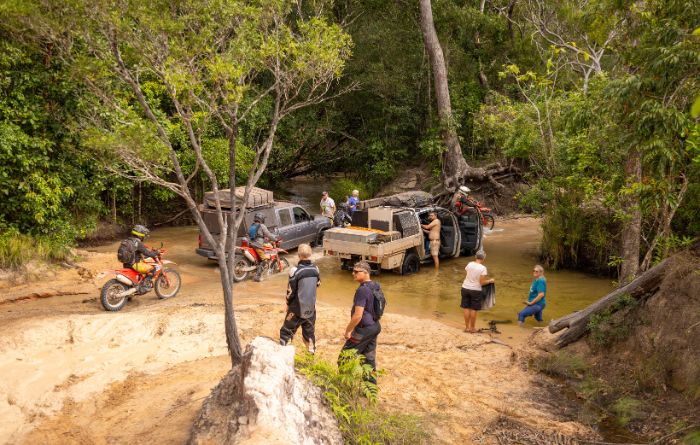
The Old Telegraph Track (OTT) is a pivotal destination for 4WD and adventure motorcycle enthusiasts, drawing explorers from around the globe to its rugged pathways. Stretching through the remote expanses of Cape York Peninsula, the OTT traces the original telegraph line that connected Australia’s far north with the southern territories.
Adventurers should prepare for a remarkable journey, as the OTT poses challenges that are not meant for the timid. “It’s a true test of skill, endurance, and preparation, making it a bucket-list goal for many,” said local tour operator Kyle Thompson.
Originally established in the late 1800s to facilitate communication via the telegraph, the OTT has evolved into an iconic adventure track characterized by its unique mix of:

- Untamed bushland and stunning tropical landscapes - Treacherous mud pits and steep hills - Narrow, rutted dirt paths - Deep river crossings.
The difficulties of the Old Telegraph Track are significant. The OTT is often classified among the toughest off-road routes in Australia. “If you break down, recovery can be expensive and slow — particularly in remote conditions where you have little room for error,” cautioned seasoned adventurer Sarah Jenkins.
Moreover, the steep and slippery banks present challenges even for the most experienced of drivers. Water crossings such as Nolans Brook, Palm Creek, and Gunshot Creek shift in depth and current based on rainfall, serving as another obstacle to navigate.

Motorcycle riders, in particular, find the Old Telegraph Track both exhilarating and demanding. “You’ll be negotiating deep creek crossings and slippery mud — a test of balance and confidence,” said veteran rider Jason Hart. The lighter weight of motorcycles can certainly be an advantage, yet recovery methods become complicated when a bike falls into watery mud. Consequently, many riders opt for guided tours for safety and support, enabling them to relish the thrills of the OTT collectively.
For those planning a vehicle journey, the Old Telegraph Track spans approximately 350 km from Bramwell Junction to the Jardine River. Travelers typically set aside three to five days to traverse this stretch, allowing time to soak in the abundant scenery and discover swimming locales along the way. “It’s worth taking your time; there’s so much beauty to appreciate,” added Thompson.
In terms of geographic context, the Old Telegraph Track is uniquely situated between Bramwell Junction to the south and Jardine River to the north within Australia’s Cape York Peninsula, Queensland. To ensure successful navigation, adventurers are strongly advised to carry a reliable map of the Old Telegraph Track. Digital navigation tools can fail in the remote setting, making traditional paper maps essential.
The history of the OTT adds another layer of intrigue to this adventure. The trail’s roots are planted in the 1880s when the Overland Telegraph Line was constructed. “Its importance in communication was pivotal until the line was decommissioned in the 1980s,” explained historian Lila Grant. Once the line fell into disrepair, a rugged access path emerged, which today has transformed into a celebrated adventurous route.

Travelers should also be aware of the seasonal access limitations posed by the wet and dry seasons. The dry season, from May to October, is typically regarded as the best time to undertake the journey. Conversely, during the wet season from November to April, heavy rains inundate rivers, rendering the track unpassable and dangerous. “Always check the current conditions with local roadhouses or national park authorities before heading out,” advised Jenkins.
Ultimately, the Old Telegraph Track represents more than just a road; it embodies a rite of passage for adventurers journeying to the tip of Australia. Its rich history, daunting obstacles, and stunning vistas combine to create one of the most rewarding off-road experiences available. Proper planning, respect for the challenges, and an appreciation for the journey itself can make this adventure indelibly memorable.