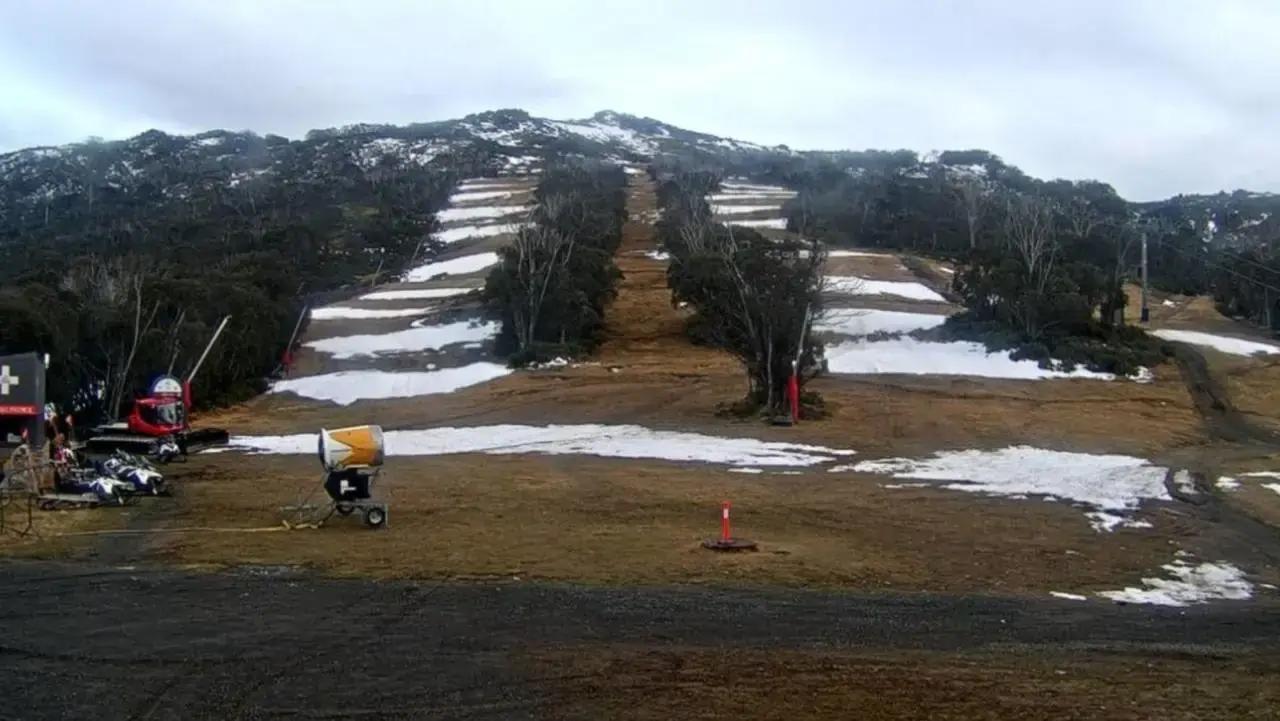
The Australian skiing community is on alert as the Bureau of Meteorology (BOM) has issued grim forecasts for the upcoming winter season. The report anticipates one of the hottest winters on record, further heightening concerns for ski resorts across the nation.
"This prediction comes after two consecutive years of above-average temperatures, raising concerns about the impact on the upcoming ski season," said Michael Fulton, a ski expert based in Melbourne. Since August of the prior year, Australia has recorded mean temperatures 2.1°C higher than the baseline average from 1961 to 1990, a worrying trend that indicates temperatures are rising significantly higher than pre-industrial levels.
The BOM's model suggests that mean temperatures could average around 1.5°C above the same historical benchmarks this winter. If this forecast holds true, it would mark one of the three warmest winters ever recorded in Australia, following the anomalies of +1.54°C in 2023 and +1.49°C in 2024. "We’re looking at a situation where conditions are likely to be exceedingly warm," Fulton noted, emphasizing the potential repercussions for the ski season.

Supporting this outlook, forecasts from the European Centre for Medium-Range Weather Forecasts (ECMWF) predict that temperatures could remain 0.5°C to 1°C above the 1993-2016 average for two-thirds of the country. These temperature increases present significant challenges for the nation’s ski resorts. "For every 1°C increase in temperature, the snowline rises by 100 to 150 metres," Fulton explained. Given Australia’s comparatively lower mountain elevations and latitude, even the coldest days may not guarantee sub-freezing temperatures necessary for sustaining snow.
The previous two seasons have posed serious difficulties for resorts in Australia, as unprecedented warmth has disrupted the usual snow patterns. Lower elevation resorts have particularly struggled to preserve snow cover, affecting not just the quantity of snowfall but also the temperature fluctuations that dictate the longevity of existing snow. "It’s not just about how much snow falls; the conditions between snowfalls matter just as much," Fulton said, pointing out the critical interplay of weather factors affecting skiing conditions.
Despite the troublingly warm forecast, there remains some uncertainty regarding precipitation levels this winter. The BOM has indicated a nearly 50% chance of rainfall deviating from the median across most regions of Australia, which leaves room for hope. Cold snaps might still occur and align with precipitation events, potentially leading to a reasonable snow season. "We must recognize that if we can get lucky with precipitation during colder days, there could still be a chance for decent skiing conditions,” Fulton remarked.
The underlying culprit for Australia's warm winter trend is linked to ocean temperature anomalies surrounding the continent. Current temperatures offshore on every coastline are significantly above normal, with the highest deviations of up to 3°C noted along the west coast. "These warmer ocean conditions are expected to persist through mid-spring, contributing to the elevated air temperatures over land," stated a BOM spokesperson, outlining the broader climatic influences at play.

As the winter season approaches, Australian skiers and resort operators are left balancing cautious optimism with the realities of warmer weather patterns. As observed, the intersecting issues of fluctuating temperatures and precipitation present a complex situation that will continually unfold. The hope remains that timely cold snaps could bring favorable conditions, but the overarching trend raises questions about the sustainability of Australia's ski season in years to come, especially in light of ongoing climate change challenges.