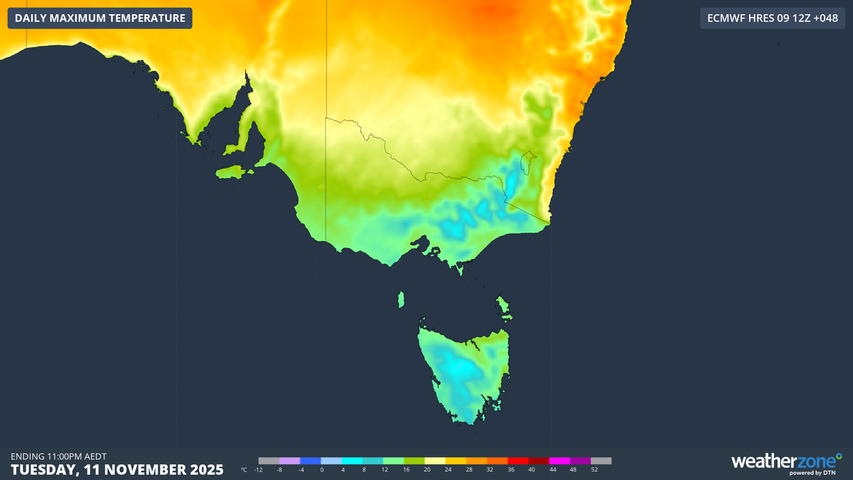
A late spring cold front is poised to blanket the Australian high country and elevated regions of Tasmania with snow this Tuesday. As this cold air mass approaches, it will create a striking contrast to the warmer temperatures typically associated with November.
"The speckled cloud pattern we see is indicative of a cold airmass with polar origins moving towards Tasmania and the coast of Victoria, as well as southeastern South Australia," said senior meteorologist Anthony Sharwood. This atmospheric shift will bring about a chilly day in Melbourne, where temperatures are expected to peak at just 14°C, feeling closer to 6 to 8 degrees due to wind chill.
This unseasonably cold Tuesday follows closely on the heels of a rainy Melbourne Cup Day, which was marked by record low temperatures — 12.7 °C, the coldest November day the city has experienced in 80 years. The rare snowfalls coated ski resorts in Victoria and southern New South Wales for the second time that week, leaving winter sports enthusiasts hopeful.

Residents of Adelaide will escape the worst of the cold snap but will still see below-average temperatures for this time of year, with highs around 19°C. Meanwhile, Hobart is bracing for a particularly dreary Tuesday. Although the official forecast suggests a maximum of 14°C, strong winds and ongoing showers will reduce the “feels like” temperature to approximately 5 degrees. As a result, snowfall could occur on kunanyi/Mt Wellington at elevations as low as 400 meters above sea level, bringing the possibility of snowflakes to upper streets in Hobart's highest suburbs.
"It’s unusual to see such back-to-back cold systems this late in the season," explained meteorologist Jane Doe. This perplexing weather phenomenon can be attributed to two primary factors: the current negative phase of the Southern Annular Mode (SAM) and the circulation of cold air nodes impacting the region.
The recent negative SAM phase allows Southern Ocean cold fronts to surge further north than usual, facilitating these late spring snowfalls. This unusual atmospheric pattern was further exacerbated by a sudden stratospheric warming event that occurred over Antarctica in September, impacting weather systems around Australia.
As forecasters dive deeper into the analysis, they note that this cold front isn't just isolated to Tasmania; temperatures are expected to remain cool across the southeastern mainland. "This week will feature only gradual warming, with no significant heat rebound as we experienced last week," said climate analyst John Smith, emphasizing the significant contrast to last week when many regions exceeded 30°C following Melbourne Cup Day.

As anticipation builds around possible snow levels both in Tasmania and on the mainland, experts remain vigilant. Numerous factors are influencing this streak of wintry weather, as reflected in the current patterns of atmospheric circulation. "As another of those cold nodes arrives on Tuesday, we’ll keep everyone updated on how low the snowflakes fall in Tasmania and the mainland," noted Sharwood, hinting at the ongoing unpredictability of Australia's climatic conditions.
With summer only weeks away, this unexpected cold snap provides a stark reminder of the complexities involved in weather forecasting and the intricate connections between atmospheric phenomena. As Australians gear up for the sweltering months ahead, the lingering effects of the unseasonable chill present an intriguing developmental chapter in the Australian climate narrative.